

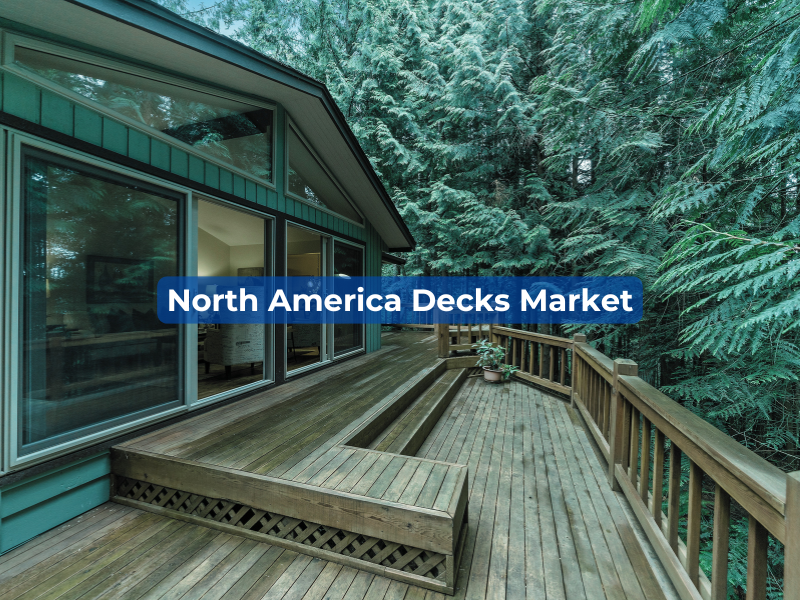
Decks and patios have become more than just outdoor features, they are extensions of living spaces, providing areas for relaxation, entertainment, and family gatherings. Homeowners across North America are increasingly investing in these outdoor spaces to enhance property value, functionality, and aesthetic appeal.
From cozy single-level decks to expansive raised patios, the demand for well-designed outdoor living areas is shaping the deck and patio construction industry. DeckBuilders Pro explores the trends, drivers, challenges, and regional insights defining the North American decks market today.
Market Size and Revenue Trends
As part of the North America decks market, The U.S. market size of deck & patio construction in 2024 was $1.3 billion, slightly lower than 2023 by -1.0%, but projections show growth in both deck and patio construction segments. The North America decks market overall was valued at USD 4.32 billion in 2023, with forecasts to reach USD 6.35 billion by 2030 at a CAGR of 5.7%.
Growth is attributed to increasing disposable income, homeownership rates, and demand for outdoor entertainment and recreational activities, including residential and commercial decks.

Industry Business Count and Structure
As of 2024, there were 6,746 deck and patio construction businesses in the U.S., reflecting a small decline of -0.1% from 2023.
The industry is fragmented, with a large number of small- and medium-sized manufacturers operating at regional, state, and country levels. Leading companies have established supply chains through in-house channels or third-party distributors to expand geographic reach.
Materials and Market Share
The material segment is dominated by wood, which held a 71.4% revenue share in 2022 in North America. Wood remains popular because it is naturally strong, renewable, and widely available, supporting long-term demand. Composite and PVC materials are gaining traction for durability and low maintenance, while eco-friendly options continue to expand.
Material Revenue Share (2022)
| Material | Revenue Share (%) |
| Wood | 71.4 |
| Composites | 23.6 |
| Others | 5.0 |
Deck Types and Construction Trends
Attached decks dominated in 2022 due to rising real estate prices and homeowners maximizing existing property space. This segment is expected to grow at a CAGR of 4.6% through 2030. Single-level decks accounted for the highest market share in 2022, favored for residential construction and renovation projects.
The raised deck installation level is projected to grow at a CAGR of 5.8%, driven by the desire for enhanced curb appeal and property value.
Deck Sizes and Construction Type
Small decks (80–300 sq. ft.) accounted for 25.3% of revenue in 2022, while medium-sized decks are expected to grow at the fastest CAGR of 5.8%, appealing to middle-income households seeking cost-effective customization.
New construction drives demand with a projected CAGR of 5.5%, as rising residential construction requires quality outdoor living spaces. Existing homes also contribute, as decks are increasingly viewed as functional extensions of living areas, using durable, low-maintenance materials.
Key Market Players
The U.S. deck and patio market is competitive, featuring companies expanding through acquisitions, collaborations, and product innovations. Notable North American companies include:
- Trex Company, Inc.
- Fiberon
- AZEK Company, Inc.
- Lumberock
- Cali Bamboo, LLC
- Deckorators, Inc.
- Wahoo Building Products
- Last-Deck, Inc.
- TRUNORTHDECK
- Nexan Building Products, Inc.
Major acquisitions include The Azek Company, Inc. acquiring StruXure Outdoor, Inc. in January 2022, enhancing its outdoor living product portfolio.
Regional Insights
As per Grand View Central, In the U.S., residential construction is a key driver for deck demand. As of March 2022, the country recorded 1,873,000 building permits, 1,793,000 housing starts, and 1,303,000 housing completions, highlighting a growing need for outdoor living spaces in both new and ongoing residential projects.
Canada’s construction sector is also expanding, with total building construction investments reaching USD 20.0 billion in February 2022. Investment in single-family homes accounted for USD 8.0 billion, while multi-unit construction reached USD 6.9 billion, reflecting opportunities for deck installations in new and renovated homes.
Mexico’s deck market is experiencing rapid growth due to urbanization and rising residential and commercial construction projects. Renovation and remodeling activities are increasingly popular, encouraging homeowners to add or improve decks, thereby boosting demand in both new and existing properties.
Market Drivers and Challenges
The U.S. deck and patio market is shaped by a combination of economic, lifestyle, and construction trends. Understanding the key drivers and challenges is essential for homeowners, builders, and industry stakeholders to make informed decisions.
Drivers
Several factors are fueling the growth of the deck and patio market in North America:
- Increasing disposable income and homeownership rates, enabling more homeowners to invest in outdoor living spaces.
- Growing demand for outdoor entertainment spaces, such as areas for parties, family gatherings, and recreational activities.
- Rising real estate prices, encouraging attached deck construction as an efficient way to maximize property value.
- Adoption of durable, low-maintenance, and eco-friendly materials, including wood and composite decking, to meet consumer preferences and sustainability goals.
These drivers are expected to continue supporting market expansion through 2030, as more homeowners prioritize functional and aesthetically appealing outdoor areas.

Challenges
Despite strong growth, the industry faces several hurdles that may affect adoption and construction:
- Fluctuating raw material prices (wood, composites), impacting project costs and profitability.
- Skilled labor shortages, which can slow down construction timelines and limit project capacity.
- Weather-dependent installation schedules, particularly in regions with harsh climates or seasonal variations.
- Regulatory compliance and environmental restrictions, requiring adherence to building codes and sustainable practices.
Overcoming these challenges will be critical for maintaining steady growth, ensuring projects are completed on time, and meeting both consumer and regulatory expectations.
Conclusion and Outlook
The U.S. deck and patio construction market is poised for steady growth through 2030, supported by residential construction, rising disposable income, and demand for aesthetically pleasing outdoor living spaces. Wood remains the dominant material, while composite and PVC decks gain popularity for maintenance advantages.
Single-level and attached decks are preferred for residential properties, and medium-sized, raised decks are expected to see the fastest growth. Overall, the market outlook is positive, with opportunities in new construction, renovations, and high-end outdoor living solutions.