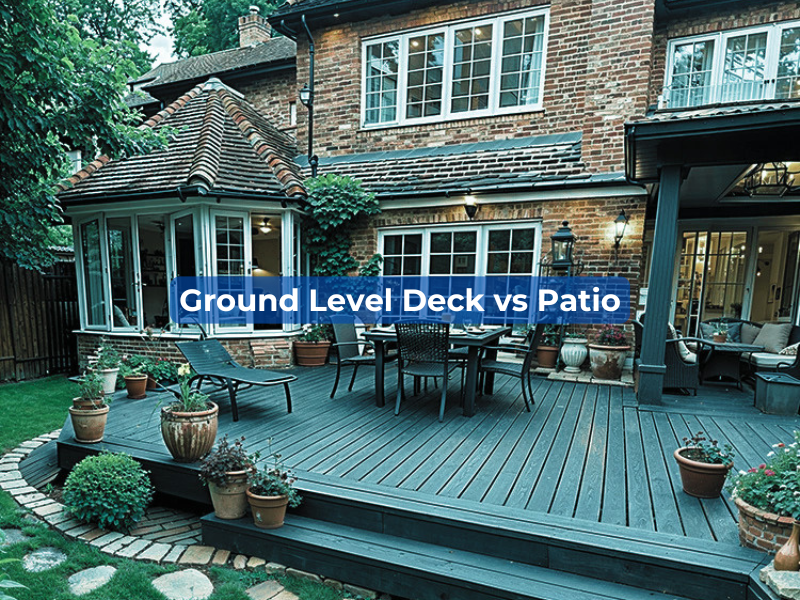
Choosing between a ground level deck vs patio isn’t just about looks, it’s about performance, durability, and how well each option fits your yard conditions. Whether you’re comparing a low deck vs patio for a new build or upgrading an existing outdoor space, the right decision depends on your soil, drainage, climate, and how you plan to use the area.
What works perfectly in one yard can fail quickly in another. Our team at DeckBuilders Pro, wrote this guide that breaks down the real differences so you can choose the smarter long-term solution.
Ground Level Deck vs Patio: Key Differences
At a glance, both options serve the same purpose, creating usable outdoor space. But structurally, they are completely different. A ground-level deck is built on a frame and sits slightly above the ground, while a patio is installed directly on a prepared base. That one difference affects everything from installation to long-term performance.
| Feature | Ground-Level Deck | Patio |
| Structure | Elevated frame | Ground-level surface |
| Best for uneven yards | Yes | No |
| Reaction to soil movement | Minimal | Varies by material |
| Comfort underfoot | High | Medium |
| Load capacity | Moderate | High |
| Installation complexity | Moderate | Depends on prep |
Understanding this distinction is critical, because it determines how each option handles real-world conditions.
What Is a Ground-Level Deck and Why Homeowners Choose It
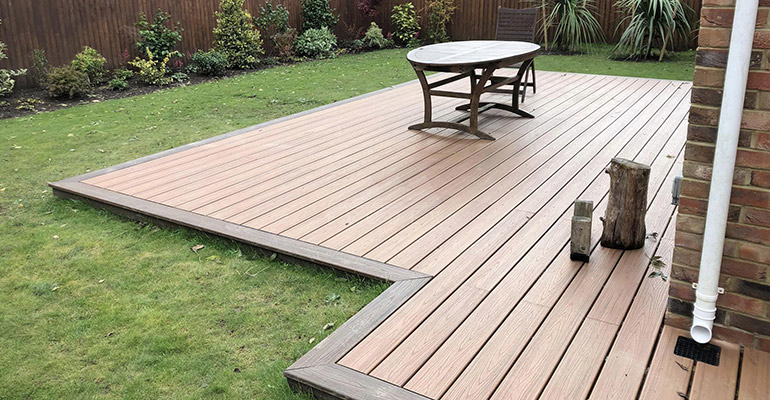
A ground-level deck, often called a low deck, is typically built under 30 inches high and doesn’t rely on the ground for structural stability. Instead, it distributes weight through framing and footings.
What’s driving more homeowners toward this option is the steady growth in demand for outdoor living spaces. The global deck construction market was valued at $14.54 billion in 2024 and is expected to climb to $24.57 billion by 2033, reflecting consistent growth as more homeowners invest in functional, comfortable outdoor areas. Ground-level decks play a major role in that trend, offering a practical and adaptable solution that fits a wide range of yard conditions and lifestyles.
Why Low Decks Are a Strong Option
Low decks are especially useful in yards where the ground isn’t perfectly level. Instead of reshaping the landscape, the structure adapts to it, which can save time and reduce site disruption.
They also offer a more comfortable surface, particularly in warm climates. Composite decking materials tend to stay cooler than hardscape surfaces, making them ideal for barefoot use. Another advantage is how they handle ground movement. Since they aren’t rigidly connected to a large surface area of soil, they avoid the cracking issues that often affect patios.
Where Ground-Level Decks Are Not the Best Fit
- Areas with persistent moisture or poor airflow underneath
- Projects requiring heavy load support without additional framing
- Situations where minimal maintenance is the top priority (especially with wood decking)
What Is a Patio and When It Makes More Sense
A patio is a ground-level surface built directly on soil that has been excavated and prepared. Common materials include concrete, pavers, and natural stone. The popularity of patios reflects a growing trend in outdoor living. Lawn and garden sales in the U.S. are expected to reach nearly $393 billion by 2028, and the global outdoor furniture market is projected to approach $63 billion. Patios remain a key part of this growth, offering durable, functional spaces that enhance homes and support outdoor lifestyles.
Why Patios Remain a Popular Choice
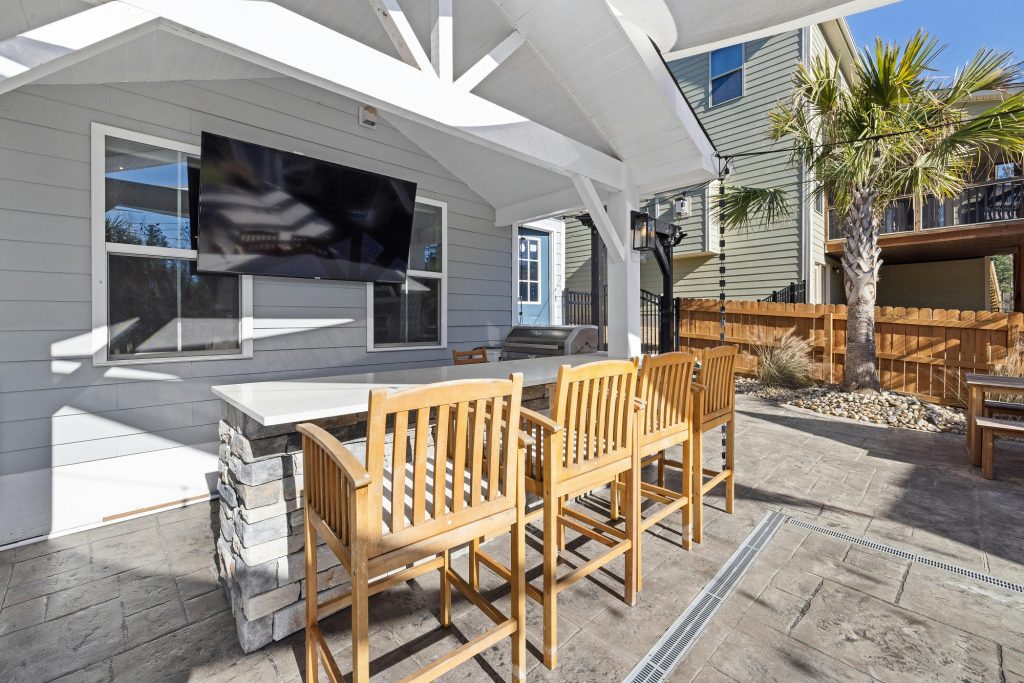
Patios are often chosen for their durability and simplicity. They create a clean, seamless extension of the yard and are ideal for supporting heavy outdoor features like kitchens, fire pits, or large seating areas.
They also tend to integrate naturally with landscaping, making them appealing for homeowners who want a cohesive outdoor design.
Installation Quality
The performance of a patio depends heavily on how it’s built. A strong base, proper grading, and effective drainage are essential. Without these, even high-end materials can fail.
Patio material choice also matters. Concrete offers a simple and cost-effective solution upfront but can crack over time. Pavers are more flexible and easier to repair, making them a more resilient long-term option.
Low Deck vs Patio: Which Is More Durable Over Time?
Durability is one of the biggest deciding factors when comparing a low deck vs patio. Low decks perform well because they are structurally independent from the soil. This means they aren’t directly affected by ground movement, which is a common cause of damage in outdoor surfaces.
Patios, on the other hand, rely entirely on the stability of the base beneath them. When properly installed, paver patios can handle minor movement and remain stable for years. Concrete surfaces are more vulnerable due to their rigidity. Weather also plays a role. In regions with temperature fluctuations, materials expand and contract. Decks handle this naturally, while patios require proper jointing and installation techniques to avoid damage.
Ground Level Deck vs Patio Cost: Upfront vs Long-Term Value
Cost is often the first question homeowners ask when comparing a ground level deck vs patio, but the real answer lies in long-term value.
Ground-Level Deck Costs
Low decks are generally more affordable than elevated decks but still require structural framing. Material choice plays a major role, pressure-treated wood is more budget-friendly upfront, while composite decking has a higher initial cost but lower maintenance over time.
Patio Costs
Patios vary widely depending on material. Concrete is usually the most affordable upfront, while pavers fall into a mid-range category with better long-term performance.
Preparation is where costs can increase. Excavation, base installation, and drainage solutions are essential and should never be skipped.
The Bigger Picture
Over time, composite decks offer predictable maintenance costs, while paver patios provide flexibility through easy repairs. Concrete patios may seem cost-effective initially but can become expensive if cracking or replacement is needed.
Ground Level Deck vs Patio: A Simple Way to Decide
If you want a straightforward answer when comparing a ground level deck vs patio, it comes down to how your space functions:
- Choose a ground-level deck if your yard is uneven, has drainage challenges, or you prioritize comfort and aesthetics
- Choose a patio if you want durability, low maintenance, and strong support for heavy features
- Be cautious with concrete in areas where soil movement or extreme weather is common
Ultimately, the best choice is the one that fits your yard’s conditions and your lifestyle, ensuring a beautiful and functional outdoor space for years to come.
Why a Deck and Patio Combination Often Works Best
Many homeowners find that combining both options delivers the best results. A deck can serve as a transition from the house, creating a comfortable and inviting entry point. A patio can extend the space outward, providing a durable surface for entertaining and outdoor features.
This layered approach works especially well in yards with slopes or varying elevations and offers a balance of comfort, functionality, and visual appeal.
Planning Your Outdoor Space the Right Way
Choosing between a ground level deck vs patio isn’t just about picking a material, it’s about designing a space that works with your property. Before making a decision, take time to evaluate your yard’s soil, drainage, sun exposure, and layout.
These factors will determine not just how your outdoor space looks, but how well it performs over time. The right choice is the one that fits your environment, and continues to work for years after it’s built.